












Online



Functional configuration of steel pipe palletizing machine
2026-02-09
As a key equipment on modern industrial automation production lines, the steel pipe palletizer has a wide range of functional configurations aimed at achieving efficient, precise, and safe palletizing operations. The following is a detailed overview of its functional configuration, integrating current (2026) mainstream technologies and application practices.
1、 Core functional modules
The functional configuration of the steel pipe palletizer revolves around the core process of "conveying identification grabbing stacking control".
1. Product conveying system
Function: Transport steel pipes smoothly and continuously from the production line (such as sawing, straightening) or storage area to the palletizing machine working area.
to configure:
Roller conveyor/conveyor chain: usually using a combination of "pre palletizing roller conveyor+intermediate conveyor chain+post palletizing roller conveyor".
Customized design: Roller length (such as 400-1400mm) and motor power (such as 2.2-5.5kw) can be customized according to the length and weight of the steel pipe.
Grouping and material blocking: equipped with grouping and material blocking mechanisms, used to separate continuous steel pipes into a predetermined number of "bundles" for the mechanical arm to grasp.
2. Identification and positioning system
Function: Accurately obtain the position, posture, size, and bundling information of steel pipes, providing data support for grasping.
to configure:
Machine vision/sensors: Identify steel pipes through industrial cameras, laser sensors, etc.
Intelligent algorithm: With adaptive capability, it can automatically compensate for the dimensional tolerance of steel pipes, ensuring stable grasping in different batches and specifications.
3. Grabbing and stacking system
Function: Perform core grabbing, handling, and stacking actions.
to configure:
Execution mechanism (robotic arm/gripper):
Electric permanent magnet suction cup: suitable for steel pipes with good magnetic conductivity (such as carbon steel pipes), with strong gripping force and no damage to the pipe body.
Vacuum suction cup: suitable for smooth surfaces or non-magnetic materials (such as stainless steel pipes).
Mechanical gripper: clamped by V-shaped or curved fixtures, with anti slip design (such as rubber pads) to ensure stable grip.
Lifting capacity: usually in the range of 0-100kg, can be customized according to needs.
Sports mechanism:
Lift and Rotate: Adjust the gripping height and direction to achieve flexible stacking.
Stacking mechanism: It is composed of conveying rollers and stacking rollers, and various stacking forms such as square bags and hexagonal bags can be achieved by adjusting the angle. The number of stacking layers and arrangement can be adjusted.
Drive mode: High end models use servo motors, which have fast response, high precision, and smooth operation; Some models combine hydraulic cylinder drive to provide greater power.
4. Control system
Function: As the "brain" of the device, it coordinates the operation of various components and interacts with the upper level system.
to configure:
Control core: Adopt PLC (Programmable Logic Controller) or industrial computer.
Operation interface: touch screen+buttons, supporting parameter input (such as steel pipe diameter, length, bundling type), realizing one click switching of working mode, suitable for multi variety and small batch production.
System integration: Connect to the factory MES (Manufacturing Execution System) through IoT technology to achieve remote monitoring, data analysis, and production management.
5. Detection and adjustment system
Function: Ensure palletizing quality and safety.
to configure:
Self checking function: After the stacking is completed, it automatically detects the stability, height, and neatness of the stack.
Manual re inspection interface: Set up a manual inspection station to ensure that the final quality is controllable.
Exception handling: When a problem is detected (such as tilting or misalignment), the palletizing program can be automatically adjusted or restarted.
2、 Key technical parameters
The following are the core parameters that need to be considered when selecting and evaluating a steel pipe palletizer:
Typical numerical values/range descriptions for parameter categories
The power supply and power are three-phase 380V, with a power of approximately 7.5KW, suitable for different industrial environments. Some models support single-phase 220V.
The working gas source is 0.4-0.6 MPa to ensure stable operation of pneumatic components.
Work at a speed of 5-7 times per second or 1000-1200 packages per hour to efficiently complete palletizing tasks, matching the production line rhythm.
The working radius is about 2500mm, and the height of 2000mm determines the coverage range and stacking height of the palletizer.
The maximum load capacity for palletizing is 2500KG (including pallets), which should be calculated based on the weight of a single steel pipe multiplied by the number of layers and the weight of the pallet, with a reserved margin of 10-20%.
The palletizing accuracy is ≤± 1mm (high-end can reach ± 0.5mm). Insufficient accuracy can lead to palletizing collapse and increase subsequent sorting costs.
The applicable steel pipe diameter is 20-200mm, and the length can be customized. The specific specification range of the steel pipe needs to be clearly informed to the supplier.
3、 Expansion and advanced feature configuration
In order to meet higher-level production needs, the palletizer can also integrate the following functions:
Integrated functions:
Automatic weighing: Real time monitoring of the weight of each layer or stack of steel pipes to ensure safe stacking.
Automatic packaging: integrating laminating, labeling, packaging and other units to achieve unmanned packaging.
Tray inventory management: Automatically supply and recycle trays, and sound an alarm when trays are exhausted.
Flexibility and Intelligence:
Quick changeover: By adjusting software parameters, it can adapt to different specifications of steel pipes without the need for hardware modifications.
Modular design: Users can freely combine functional modules according to their needs (such as adding a labeling machine later).
Cloud collaboration: By connecting to the factory MES system through the Internet of Things, remote monitoring, fault diagnosis, and data analysis can be achieved.
Energy conservation and environmental protection:
Servo motor and energy recovery: Some high-end models can reduce energy consumption by more than 30% and reduce noise.
Dust free design: suitable for industries with high cleanliness requirements (such as pharmaceuticals and electronics, although not commonly used in steel pipes, the technology can be used for reference).
4、 Common models and selection suggestions
1. Main models:
Longmen palletizing machine: structurally stable, with a large load capacity, suitable for large-scale palletizing of heavy and large-sized steel pipes, but with a large footprint.
Articulated palletizing robot: high flexibility, small footprint, fast speed, able to adapt to complex palletizing paths and multi specification steel pipes, often linked with AGV (Automated Guided Vehicle) to achieve the "goods to people" mode.
2. How to Choose (Avoiding Pits Guide):
Clear requirements: Firstly, list key parameters such as steel pipe specifications, stacking layers, production line pace, and workshop space.
Load and Range: Calculate the maximum load (single weight x number of layers+pallet weight) and ensure that the working range covers the span of the production line. It is recommended to reserve 10-20% margin.
Testing accuracy and speed: Accuracy directly affects the stability of palletizing, and speed needs to be balanced with the production line rhythm. If it is too fast, it may sacrifice accuracy.
Focus on core components:
Structural material: High strength steel (such as Q345B) or aluminum alloy is preferred to ensure the stability of the frame.
Drive and transmission: Servo motors are superior to stepper motors; Check the quality of transmission components such as gears and chains.
Fixture: Choose according to the shape of the steel pipe (V-shaped fixtures are suitable for round pipes), and be sure to test the anti slip effect with samples.
Control system: Prioritize selecting PLC systems that support parameter adjustment and fault diagnosis to avoid outdated relay control.
Calculate return on investment (ROI): Taking into account the saved labor costs, reduced losses and equipment investment, depreciation and operating costs, evaluate the investment return cycle (usually expected to recoup costs in about 3 years).
Field investigation and trial: Visit supplier factories, observe prototype operation, and request trial opportunities to verify actual palletizing effects.
In short, the functional configuration of the steel pipe palletizer is a highly customized process that requires comprehensive consideration of specific production needs, steel pipe characteristics, workshop environment, and budget to select the most suitable configuration plan.
Related News
Steel pipe bundling automatic palletizing forming machine
Introduction to Steel Pipe Stacking Machine in Steel Plant
How long steel pipes can the steel pipe palletizer handle
Application of Automatic Stacking Machine for Pipe Materials in the Steel Pipe Industry
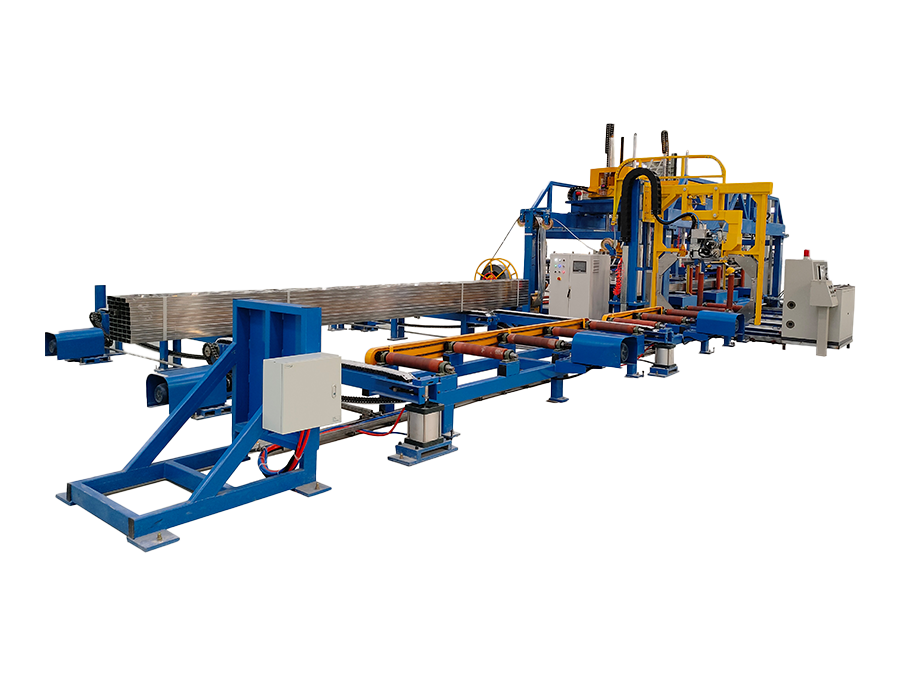
The automatic palletizing machine for steel pipe bundling is an automated equipment that integrates the functions of steel pipe conveying, automatic bundling, and palletizing forming. It is widely used in steel pipe production, warehousing
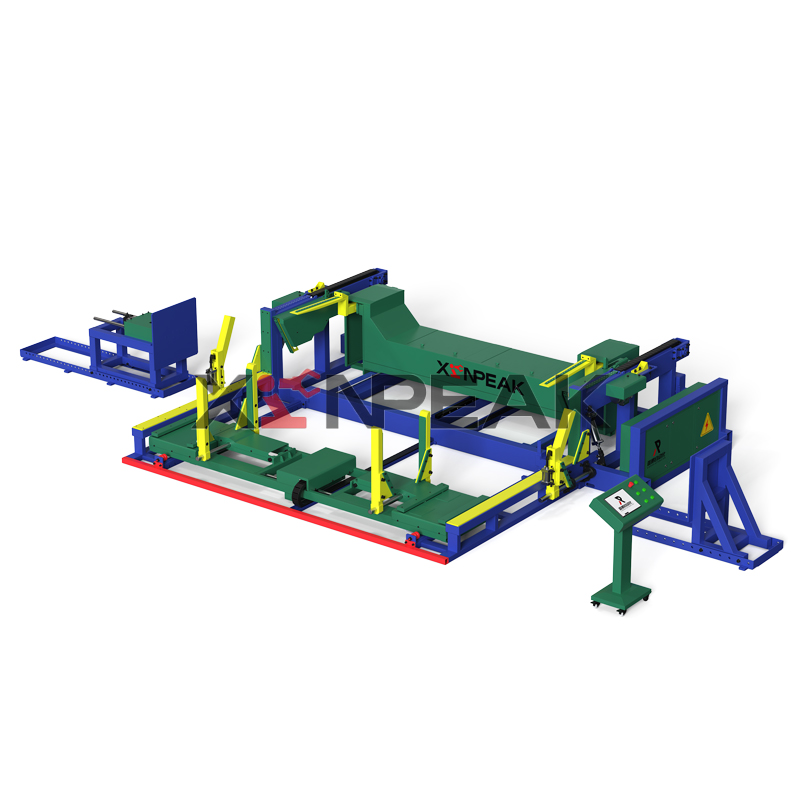
Steel pipe palletizing machine is a specialized equipment for automatic palletizing of steel pipes, which can achieve automatic handling, stacking, and packaging of steel pipes, significantly improving production efficiency and reducing labor costs
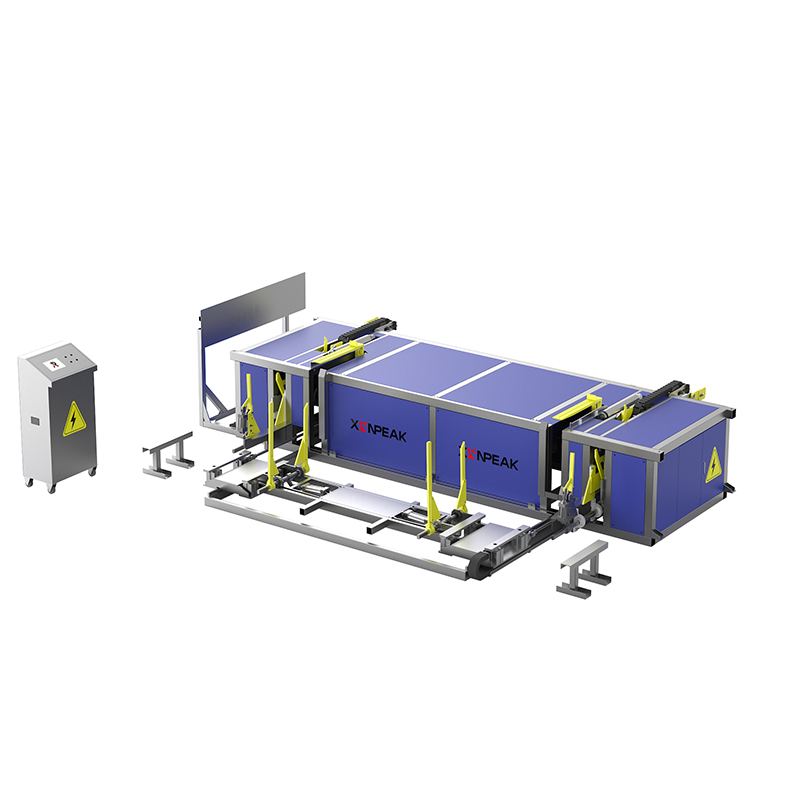
The steel pipe palletizer can handle a wide range of steel pipe lengths, with common equipment capable of handling steel pipes ranging from 4.5 meters to 16 meters in length. Some customized equipment can even support longer steel pipe processing needs
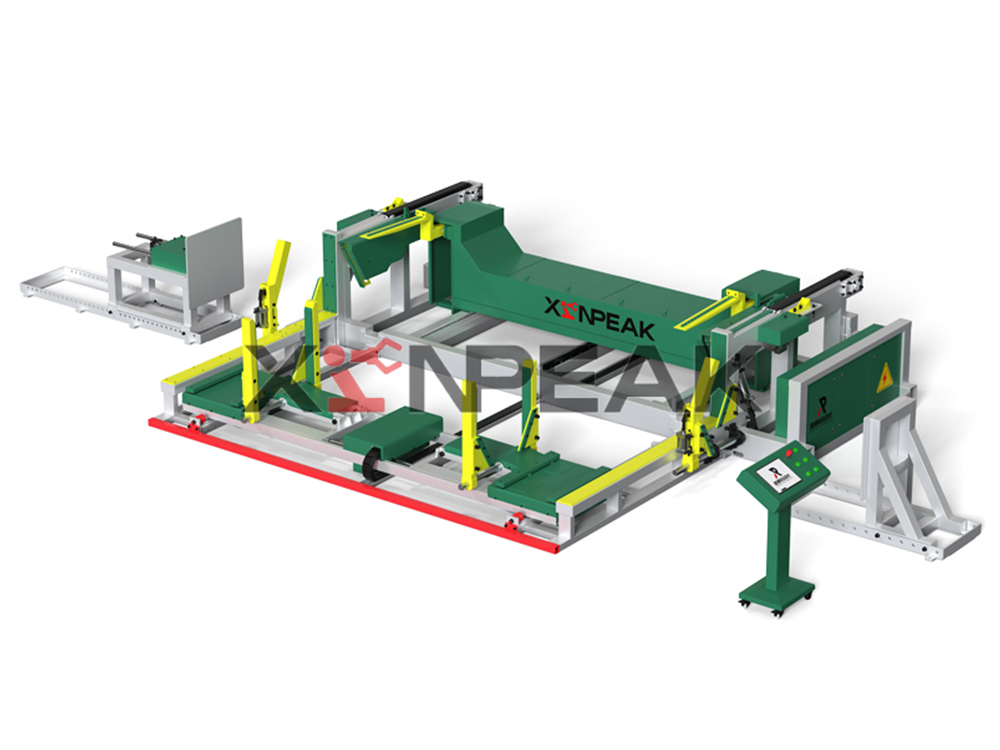
As a key equipment for automated logistics and production packaging, pipe palletizing machines are playing an increasingly important role in the steel pipe industry. It is not only a mechanical replacement for manual handling
Contact Us
You can contact us through the following four methods. We will reply to your inquiry within 2-8 hours after receiving it!
Call Us
Send Email
Leave a Message
Add WeChat or WhatsApp